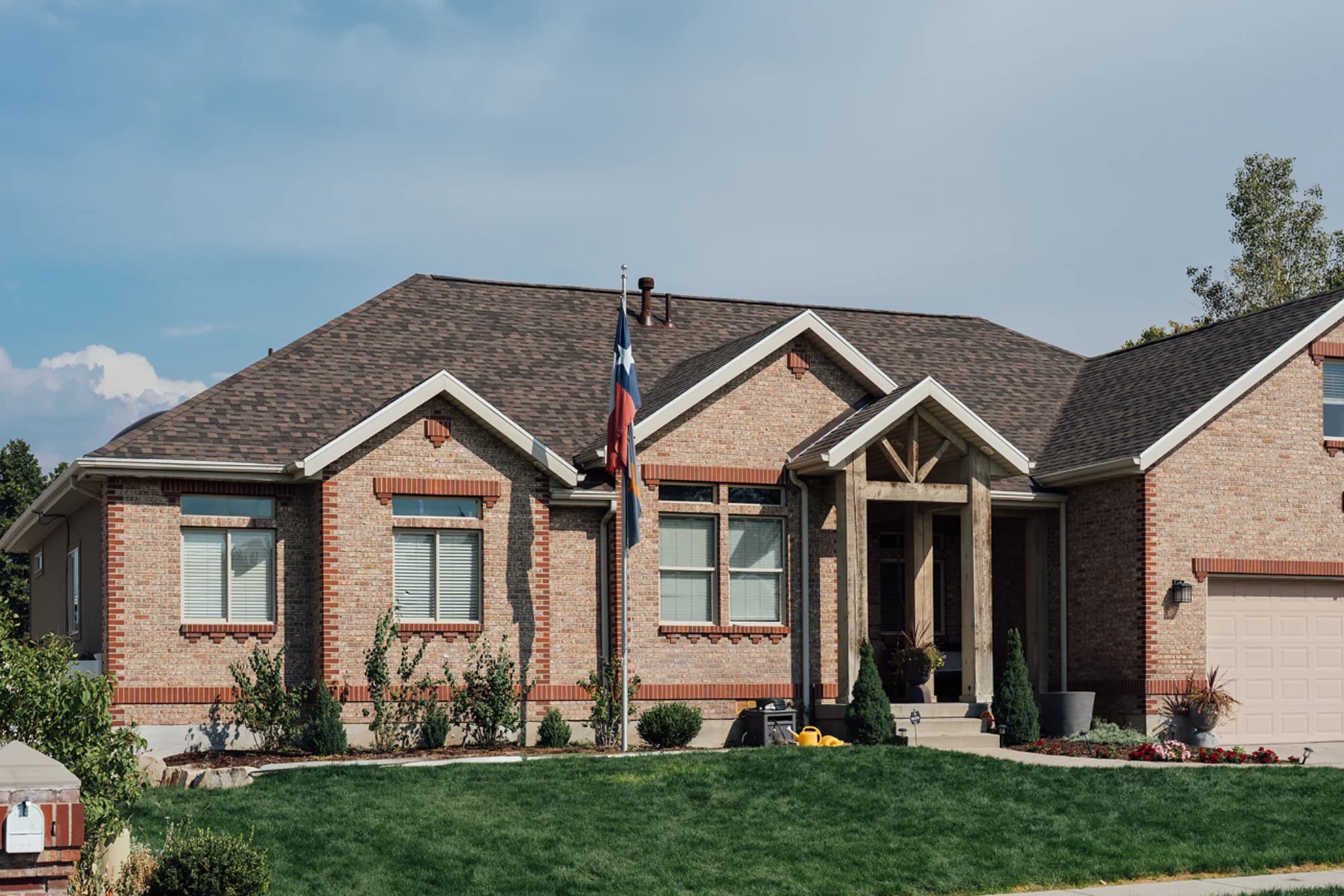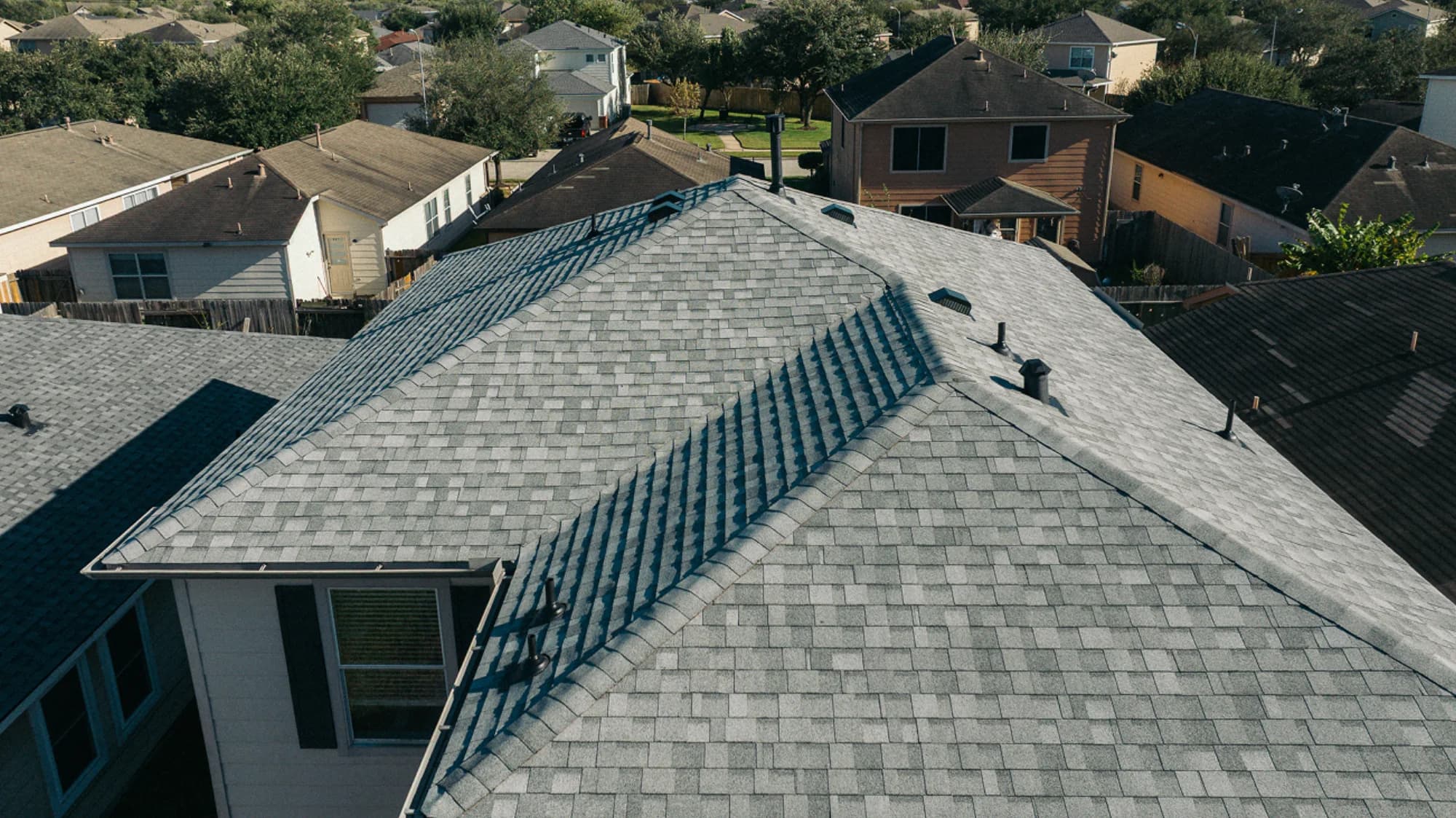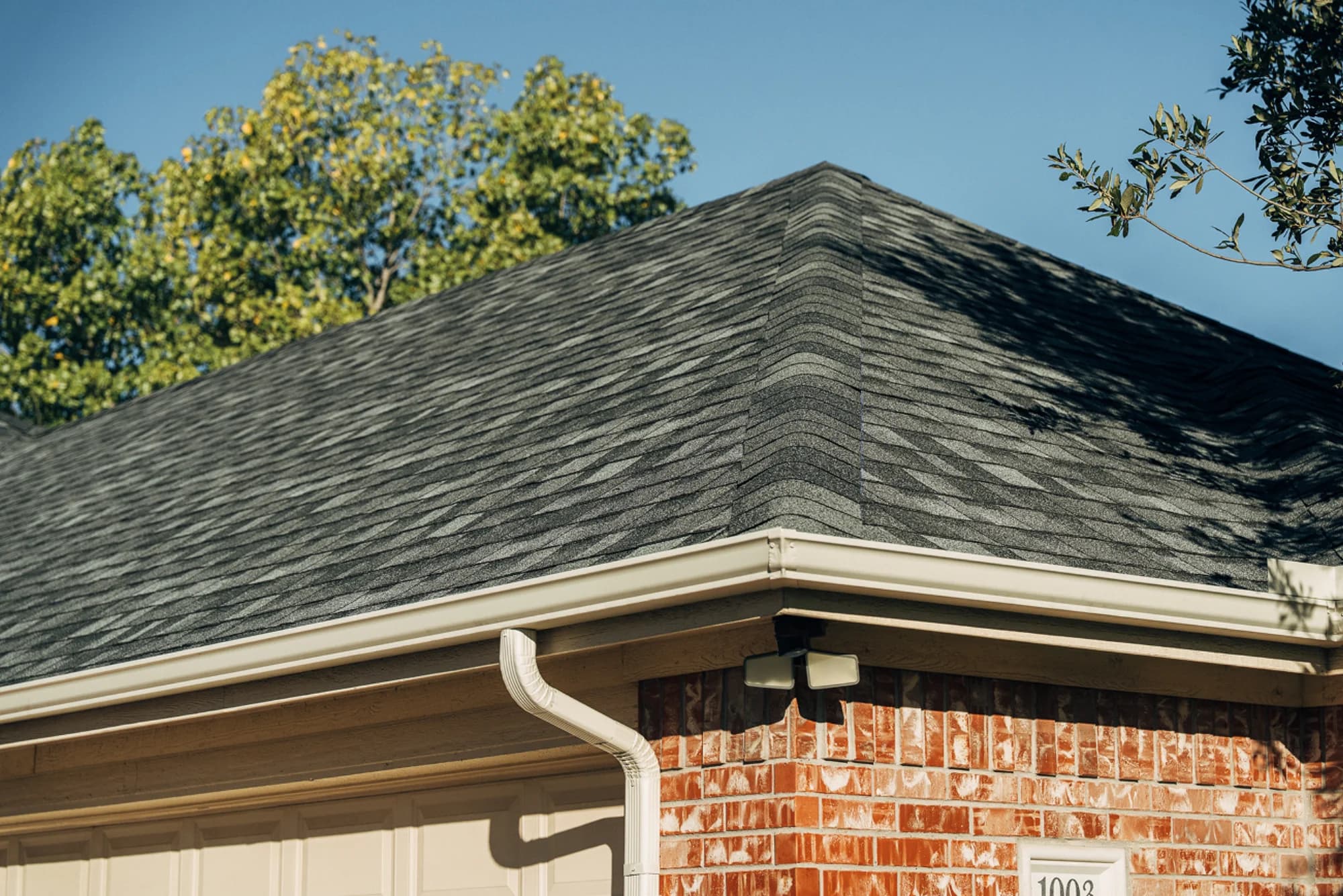
If your roof replacement lands in late fall or winter, or the forecast keeps showing rain, you might wonder whether the work can go ahead. Cold weather does not have to stop a roof replacement, but it changes how shingles are handled and sealed. However, rain is different since the crew cannot shingle over a wet deck.
What changes when it is cold
The crew adds a few steps. Owens Corning’s Duration shingle instructions (opens in a new tab) list these precautions for installation below 40°F:
- Leave a slight gap, no more than 1/16 inch, at the end joints of field shingles so they do not buckle when they expand in warmer weather.
- Hand-seal every shingle around the roof’s perimeter with four 1-inch dabs of asphalt cement. This protects against wind uplift while the temperature is too low for the shingles’ adhesive strip to activate.
- Use extra care handling shingles.
IKO’s Cambridge shingle instructions (opens in a new tab) take a similar approach. They call for manual sealing when cool weather, high winds, or blowing dust may limit the sealing strip. They recommend storing hip and ridge shingles in a heated area before cold-weather installation to allow for bending more easily.
Other products on your roof, such as ice and water barriers and sealants, come with their own instructions. Your contractor can tell you which ones apply to the materials in your quote and what the crew will do if temperatures drop near those limits. Our guide to synthetic vs. felt underlayment covers the layer under the shingles.
Why rain pauses the work
Rain affects the job more directly than cold temperatures. Remi’s timeline says rain stops roofing immediately, and a wet deck can delay the restart. Manufacturer instructions explain why. Owens Corning tells installers to prevent the wood deck from getting wet before, during, and after installation, and IKO states that the deck must be smooth, firm, clean, dry, and securely nailed before shingles go on.
That is why a crew may hold off on a day that looks fine on your phone’s forecast. A few dry hours are not much help if the deck is still damp from overnight rain, or a storm is expected before the exposed area can be covered.
Questions to settle before tear-off
Once the old roof is off, parts of the deck are exposed until the new layers go on. It is easier to agree on a weather plan before that point than during it. Ask your contractor:
- 1How much of the roof will be opened at one time?
- 2How will open areas be protected if weather changes or work stops for the day?
- 3Who decides whether to start, pause, or postpone, and how will you hear about it?
- 4If the start date moves, where will delivered materials be stored?
How weather fits into a Remi timeline
Remi’s timeline mentions that most homes are finished in 1 to 3 working days once the crew starts. Day 1 typically covers tear-off, deck repairs, underlayment, and the first shingles. A third day is less common and is usually reserved for final touches, extra cleanup, or weather-related interruptions. Remi confirms the scope, materials, and start date before the crew shows up. We’ll keep you informed every step of the way with text updates and a project milestone tracker.
Their communication-especially the timely text updates - made the entire process smooth and stress free.
Nina’s review describes one project. Confirm how your team will communicate a weather delay and any revised schedule.
Permits and the final inspection run on your city’s schedule, which can take longer than the install itself. Remi handles permitting and scheduling, then books the final inspection. The roof replacement permit guide explains that part of the timeline.
Roof quote
Get a quote now and plan around the weather
You can get a price now and settle the start date as the forecast comes into focus.
Questions homeowners ask
Usually, once the sun warms them. IKO says shingles should seal to the course below when the factory sealant is sufficiently warmed by direct sunlight. Hand-sealing in cold weather covers the period before that happens.
Not a universal one. NRCA’s homeowner resources say there are no specific temperature guidelines for when it is too cold to install asphalt shingles. In the Owens Corning instructions, 40°F is where the cold-weather steps begin, and other products may set different limits.
Sources and further reading
- Owens Corning: Duration Series Shingles Installation Instructions (opens in a new tab) (checked 2026-10-25)
- IKO: Cambridge Shingles Application Instructions (opens in a new tab) (checked 2026-10-25)
- National Roofing Contractors Association: NRCA Resources (opens in a new tab) (checked 2026-10-25)
Product instructions, warranty terms and local requirements can change; use the documents that apply to your project.