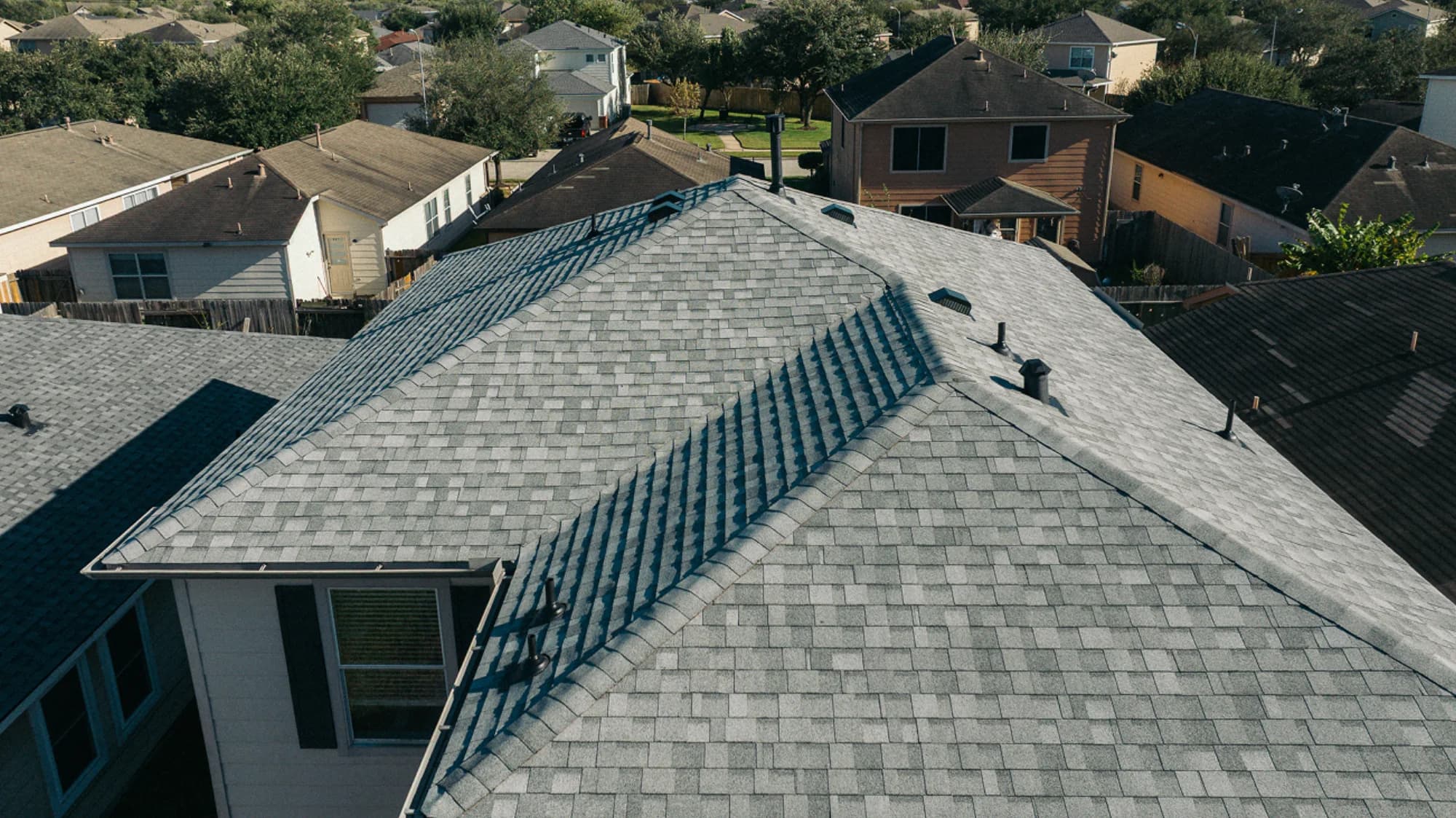
If you are replacing your roof, you may be wondering whether metal is worth the extra cost over asphalt shingles. The most useful comparison considers the whole system each contractor is proposing. This includes the exact panel or shingle, how it attaches, how the openings are flashed, and what the price includes.
How lifespan and cost compare
Metal usually costs more upfront and carries a longer rated life. Architectural asphalt shingles are typically rated for 25 to 30 years (FAQ); metal can last 40 to 70. These figures are manufacturer estimates under normal conditions, not guarantees, and actual lifespan depends on local weather, ventilation, and maintenance.
Remi’s How Much Does a Roof Replacement Cost mentions that upgrades cost more in materials and install details. This includes asphalt impact-resistant shingles or metal roofing.
Your roof’s shape matters as much as the material. Valleys, dormers, skylights, and chimneys add detail work, which typically means more flashing, waterproofing, and labor. Get a bid for each so you’re comparing real numbers for your roof. You may also see a price divided by a rated lifespan to show a cost per year. Although helpful, that math leaves out financing, upkeep, repairs, and how long you plan to live in the home.
Metal and asphalt each come in several types
Metal roofing is a family of systems, not one product. The Insurance Institute for Business & Home Safety (IBHS) Roof 101 (opens in a new tab) guide names the two most common panel types for homes as exposed-fastener and concealed-fastener panels. Exposed-fastener panels, such as 5-V and rib profiles, overlap at the sides, and their fasteners stay visible. Standing-seam and snap-lock panels hide the fasteners. IBHS also describes embossed metal shingles and stone-coated metal panels that overlap like shingles and resemble tile or wood shake.
The metal itself varies too. IBHS explains that steel is the most common choice and is generally given a galvanized or galvalume coating to help prevent corrosion. Aluminum is lighter and resists corrosion better, which matters near the coast. For aluminum, IBHS notes that thickness is measured by gauge, and a lower gauge number means thicker material (26 gauge is thicker than 28 gauge).
Although asphalt shingles have fewer variations, differences still exist. IBHS separates 3-tab, architectural (also called dimensional or laminate), and designer shingles. It also explains that impact-resistant shingles may use a reinforcing scrim backing or a more flexible polymer-modified asphalt. Our guides to architectural vs. three-tab shingles and Class 4 impact-resistant shingles compare those options in more detail.
That range is why two bids that both say “metal” or “shingles” may describe very different roofs, and why the exact product line in each bid deserves a close look.
How each roof attaches
Once you know the product, the next question to address is how the roof will be attached. Metal is engineered as an assembly. The IBHS guide indicates the deck material, panel, roof height, pitch, and location all determine the fastener pattern. Metal roofs are wind-tested from the deck up and receive a design pressure rating. Your home’s location and site are determining factors. When asking for a metal bid, ask which tested rating the system carries and how the installation matches it.
For asphalt, the IBHS guide explains that underlayment goes on the deck first, then shingles are nailed in offset rows over a starter strip at the edges. The manufacturer’s installation instructions set the nailing details for each product.
Compare two bids line by line
Use the same roof areas and the same assumptions about existing conditions when comparing both bids. This table indicates topics to compare.
| Line item | Metal bid | Asphalt bid |
|---|---|---|
| Product | Metal bid Panel profile, metal, finish, gauge, and fastening system | Asphalt bid Shingle brand and product line |
| Removal | Metal bid Number of old layers coming off | Asphalt bid Number of old layers coming off |
| Decking | Metal bid How damaged decking is found and priced | Asphalt bid How damaged decking is found and priced |
| Flashing | Metal bid Edges, valleys, walls, chimneys, and skylights | Asphalt bid Edges, valleys, walls, chimneys, and skylights |
| Warranties | Metal bid Material, finish, and workmanship terms, read separately | Asphalt bid Material and workmanship terms, read separately |
When a line shows up in only one bid, ask whether the other system does not need it or whether it was left out. The answer often explains part of the price gap. Remi’s roof estimate checklist covers the rest of a like-for-like comparison.
Planning for repairs and future projects
Think about the work you might do while you own the house, such as adding a skylight, installing solar, or repairing a chimney. Each project means someone working at the roof surface. Ask each contractor how that work would be handled on their system and whether repairs call for an installer with experience in that specific product. It also helps to ask for the manufacturer’s care instructions and how matching material is ordered for later repairs.
Compare metal against a shingle quote
Remi’s guide to shingle types indicates that Class 3 architectural shingles are the standard type used. We measure your roof and give you a clear, itemized quote. Our shingle quote will function as an asphalt baseline to compare to a metal proposal.
Jade helped walk us through the whole process and helped us feel comfortable making this big purchase to better our home.
Nicole describes support during one purchase. Compare material specifications and costs for your own house.
Compare metal against a shingle quote
Request a shingle quote
Start with a real number for your own roof.
Questions homeowners ask
It depends on the finish. The Department of Energy’s 2010 Cool Roof Guidelines indicate that unpainted metals are usually good at reflecting sunlight but poor at releasing heat. Paint applied at the factory or in the field can raise both reflection of sunlight and emittance of heat. Our guide to light and dark shingles explains how to compare published ratings.
Both can carry an impact rating. IBHS says metal roofs are tested for hail under UL 2218, the same steel-ball test that gives many shingles a Class 1 to 4 impact rating. Be sure to compare the rating of the specific products. Our Class 4 shingle guide covers the shingle side.
Sources and further reading
- Insurance Institute for Business & Home Safety: Roof 101 (opens in a new tab) (checked 2026-10-18)
- U.S. Department of Energy: Guidelines for Selecting Cool Roofs (opens in a new tab) (checked 2026-10-18)
Product instructions, warranty terms and local requirements can change; use the documents that apply to your project.