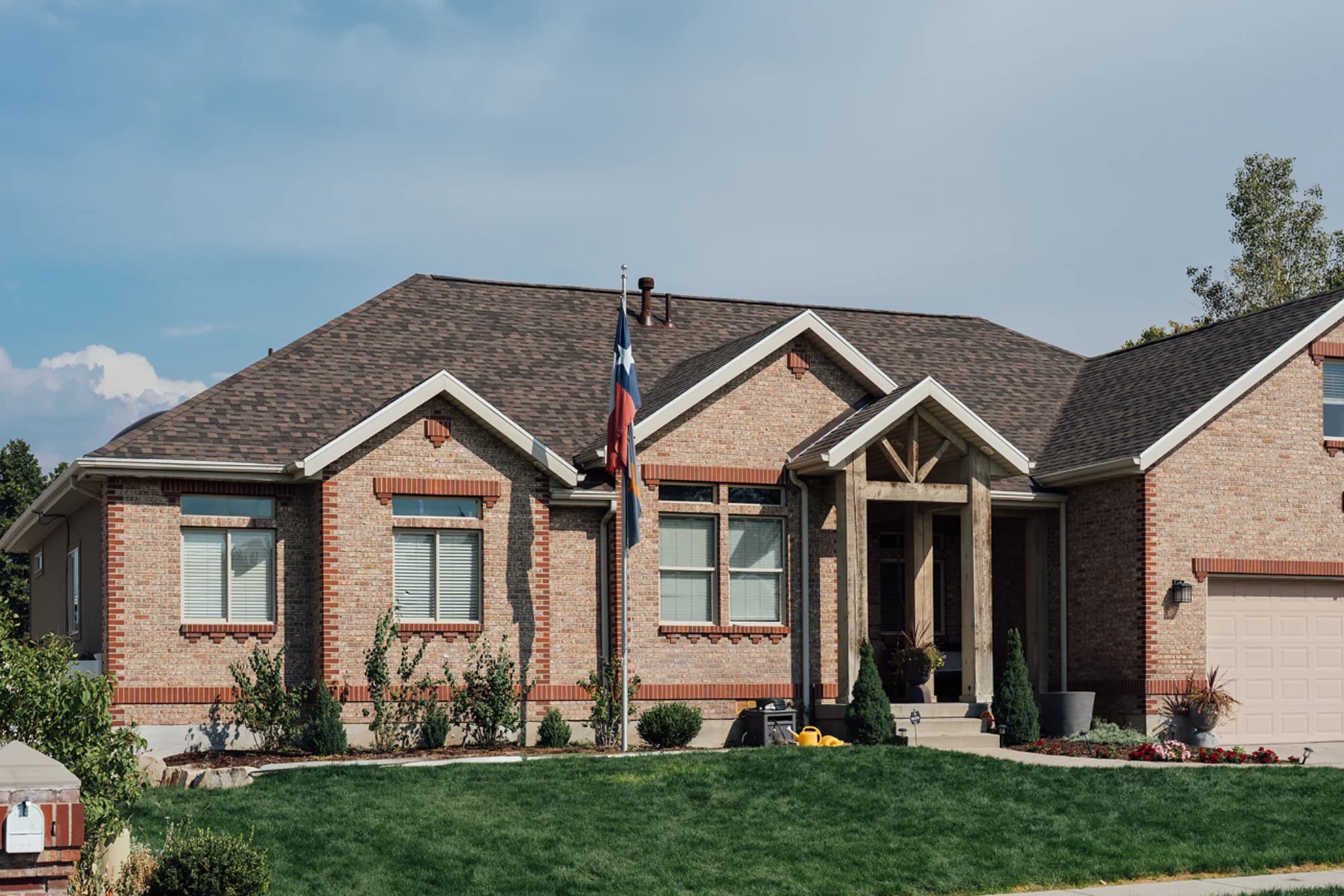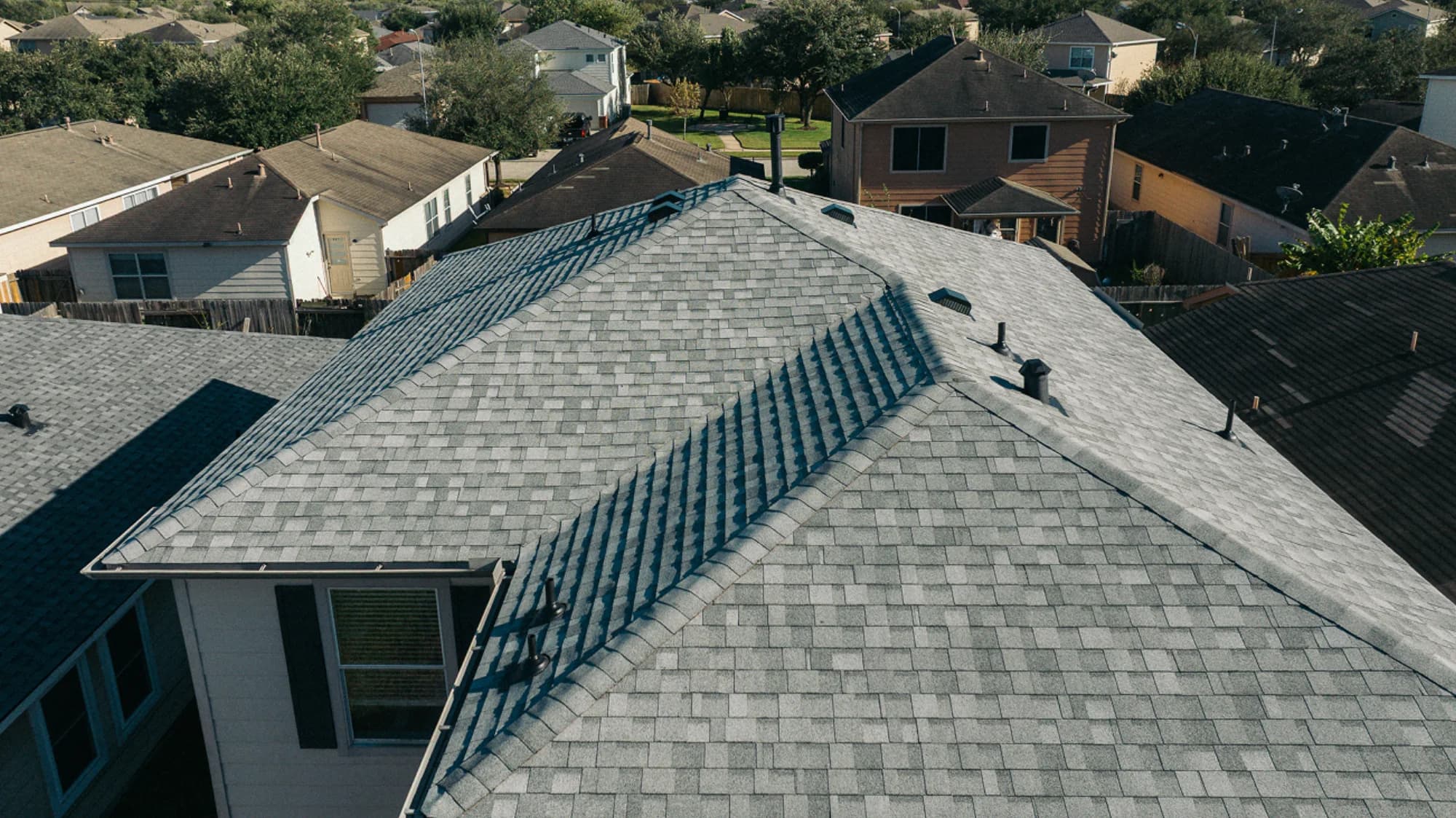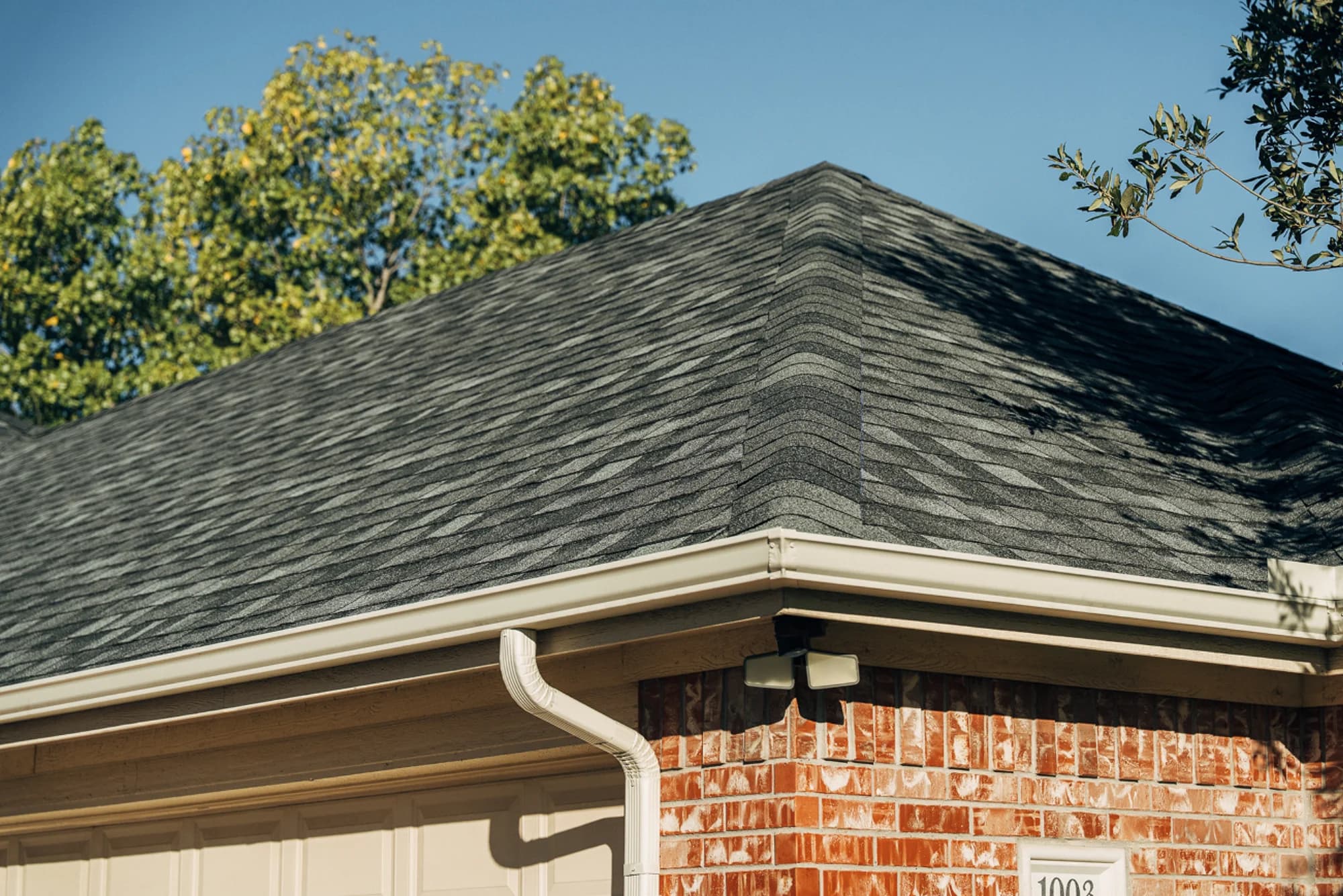
Class 4 is the top impact rating a shingle can earn in the UL 2218 test. It means the shingle took two hits in the same spot from a 2-inch steel ball with no crack showing on the back. It’s worth pricing where large hail falls, and the case is strongest when your insurer confirms a credit in writing.
The short answer
Yes, if large hail falls where you live and you price the upgrade before you sign. Class 4 is the highest of four UL 2218 classes, tested with a 2-inch steel ball. In Texas, the state insurance department says a Class 4 roof gets the highest premium credit, with each insurer setting the amount. Choose a product rated Good in the IBHS 2025 hail ratings. Note: None of the 24 products tested earned the Excellent rating.
What a Class 4 rating means
UL Solutions sorts products into four classes by dropping steel balls to match the impact energy of real hailstones (opens in a new tab). The steel ball gets bigger at each step:
- Class 1: a 1.25-inch steel ball
- Class 2: a 1.50-inch steel ball
- Class 3: a 1.75-inch steel ball
- Class 4: a 2.00-inch steel ball
A sample passes when, after two impacts in the same location, no crack is visible on the back of the shingle. You will find classification details on the product technical data sheet.
The industry also considers an additional test. Factory Mutual (FM) 4473 is the second test you will see on product sheets. This test uses lab-made hailstones instead of dropping steel balls to test roofing materials. Some shingles carry both ratings. IBHS lists the four ball sizes and the pass rule (opens in a new tab) for both UL 2218 and FM 4473.
Although these test results are helpful, there are limitations. UL 2218 looks for breaks seen from the back of the shingle and does not account for the denting or granule loss that a homeowner or adjuster can see. The product is also tested in a lab; it tells you nothing about how your roof will look after a particular storm.
The Insurance Institute for Business & Home Safety (IBHS) produces a separate evaluation method also using lab-made hailstones in the same four sizes as the UL 2218 test and then scores the dents, granule loss, and tears. The November 2025 IBHS ratings (opens in a new tab) covered 24 impact-resistant shingle products, about 95% of the impact-resistant shingles sold each year. The test results showed most shingles earned a rating of Good. None earned a rating of Excellent. IBHS now publishes a numerical score with each rating. Test results caution against the lowest two grades: If a product rates Marginal or Poor, we do not recommend using it in areas that experience hail.
Insurance Institute for Business & Home Safety, IBHS Releases Its Most Expansive Impact-Resistant Shingle Ratings to Date (opens in a new tab) Be sure to ask for the IBHS rating of the exact product along with its Class 4 label.
Why two Class 4 shingles can perform differently on a roof
Two shingles can both pass the UL 2218 Class 4 impact test, yet perform differently on a roof. This happens because manufacturers use different engineering and material methods to achieve the single lab rating.
For instance, weight, thickness and design of the shingle can change how the roof handles thermal expansion, high winds, and repeated freeze-thaw cycles over a 25- to 30-year roof life.
Class 3 vs Class 4 shingles, side by side
The following table helps compare Class 3 and Class 4 shingle information. Note that since there is no single insurance rule that is consistent throughout the country, a few states with differences are identified below.
Class 3 and Class 4 compared
Test sizes from IBHS, insurance rows from the Texas Department of Insurance and Minnesota law, the warranty row from Owens Corning, and the Remi row from Remi’s shingle FAQ.
| Question | Class 3 architectural | Class 4 impact-resistant |
|---|---|---|
| UL 2218 test ball | 1.75-inch steel ball, two hits in one spot | 2.00-inch steel ball, two hits in one spot |
| What a pass means | No crack visible on the back of the shingle. Dents and granule loss are not scored. | Same rule with the larger ball. Dents and granule loss are not scored. |
| Insurance in Texas | Rated classes can earn a premium credit. Each insurer sets the amount. | Gets the highest premium credit. Each insurer still sets the amount. |
| Insurance in Minnesota | Not covered by the state discount law, section 65A.298. | Not covered by itself. The law covers FORTIFIED homes with the hail supplement. |
| FORTIFIED Hail Supplement | Asphalt shingles qualify only with a Good or Excellent IBHS hail rating. | Same rule. The Class 4 label alone does not qualify. |
| Hail under the warranty | Read the maker’s terms. Owens Corning, for one, excludes hail damage on its Class 3 Duration lines. | Read the maker’s terms. Owens Corning excludes hail damage on its Class 4 lines too. |
| What Remi does | Remi uses Class 3 architectural shingles as the standard system. | Remi can quote the upgrade and confirm what’s available in your area. |
Bottom line
There are always differences between manufacturers. For example, read about Owens Corning’s Duration shingles (opens in a new tab). Class 4 lines need its impact-rated hip and ridge shingles to complete a Class 4 roof system. It also rates its standard Duration lines Class 3. The footnotes indicate that for both classes: Hail damage is specifically excluded from coverage under the terms of its warranty.
Read the warranty for the product you pick before you assume it pays for hail. If you’re still choosing a shingle style or comparing metal, see our guides to architectural vs. three-tab shingles and metal vs. asphalt roofs.
How insurance discounts for Class 4 roofs work
Insurance discounts vary by carrier and state. Two state agencies show how wide that range is.
Texas. The Texas Department of Insurance says roofing that passes an impact test is classified as Class 1, 2, 3 or 4. In its words, A Class 4 roof covering would receive the highest premium credit.
The TDI (opens in a new tab) further states that each insurance company sets the amount of the discount, the tests it accepts, and the paperwork it wants. For example, for Texas Windstorm Insurance Association policies, the contractor fills out TDI form PC068 after installation.
Minnesota. State law (opens in a new tab) requires a discount only for homes with a FORTIFIED designation that includes the hail supplement, not for a Class 4 shingle by itself, as our FORTIFIED roof guide explains.
Ask your insurer before you sign. Get the answers in writing, then compare them with the upgrade price.
- Do you give a premium credit for a Class 4 roof, and how much is it per year?
- Does the credit apply to the whole premium or only the wind and hail part?
- Which tests count: UL 2218, FM 4473 or both?
- What proof do you need: the product label, the invoice, a contractor form or photos?
- Does anything else in my policy change when the credit applies?
If hail has already damaged your roof, start with what to do after hail hits. The insurer decides coverage and payment on a claim.
How Class 4 relates to a FORTIFIED roof
FORTIFIED (opens in a new tab) is the IBHS program for how the whole roof is built. It requires a sealed roof deck, ring-shank nails in an enhanced pattern, and a stronger roof edge. For its optional Hail Supplement, asphalt shingles must be rated Good or Excellent on the IBHS hail ratings to outperform typical Class 4 shingles when tested against realistic hailstones. A Class 4 label on the bundle does not make a roof FORTIFIED, and the designation comes with an IBHS certificate. The FORTIFIED roof guide covers the requirements. If you want the designation, discuss this before you sign so the install can be planned.
When the Class 4 upgrade is worth the money
Four questions decide most cases:
- 1Does large hail reach your area? Search your county in NOAA’s Storm Events Database (opens in a new tab). Reports of hail 1.75 inches or larger mean storms at or above the Class 3 test size have hit near you.
- 2Will your insurer credit it? A credit confirmed in writing turns part of the upgrade into a yearly saving. An unconfirmed one should not drive the decision.
- 3How does the exact product rate? Choose a Class 4 shingle rated Good on the IBHS ratings and skip Marginal or Poor.
- 4How long will you stay? Any yearly credit adds up only for the years you own the house.
Remi uses Class 3 architectural shingles as the standard system. For Class 4, Remi can quote the upgrade and confirm what’s available in your area. Ask for both prices on one quote with the same tear-off, decking, flashing and ventilation, so the only difference is the shingle. When your quote has a guaranteed price, “the price we quote is the price you pay.”
If the gap stretches the budget, Remi offers financing. For instance, $0 is due upfront and soft-pull pre-qualification takes about 5 minutes once you have a quote.
In hail country, the upgrade is worth pricing on every reroof. It pays off when large hail reaches your address, your insurer confirms a credit, and the exact shingle scores well in independent hail testing.
Before you pay for the upgrade, find the class on the product sheet of the exact shingle named in your contract. UL lists certified products in its UL Product iQ database.
Class 4 shingles in the Chicago area
NOAA’s Storm Events Database (opens in a new tab) lists 164 hail events in Cook County from 2016 through 2025. Fifteen were 1.75 inches or larger, and five were 2 inches or larger, the size of the Class 4 test ball. The largest, 2.75 inches, was reported near Evanston on April 7, 2020. Each entry is a point observation, so the list shows where large hail was measured and misses many roofs it hit.
Remi’s Chicago page puts a full roof replacement at $8,000 to $18,000, a planning range, not a final quote. A quote with both shingle options shows the Class 4 difference for your roof.
Illinois law requires a written contract or work order before home repair or remodeling work over $1,000. It must state the total cost, with parts and materials listed with reasonable particularity
, under the Illinois Home Repair and Remodeling Act (opens in a new tab). Ask for the exact shingle line and its impact class on the contract.
Class 4 upgrade pricing
Price Class 4 beside the standard roof.
Remi can quote an impact-resistant upgrade and confirm what is available in your area. Check any insurance discount with your insurer before counting on it.
Questions homeowners ask
It is a shingle that passed the UL 2218 impact test at the top level: two hits in the same spot from a 2-inch steel ball with no crack showing on the back. Some products also pass FM 4473, which fires ice balls of the same sizes. Check the class on the product sheet for the exact shingle in your contract.
They are worth pricing where large hail falls, and the case is strongest when your insurer confirms a credit in writing. Pick a product rated Good on the IBHS 2025 hail ratings, where none of the 24 products tested earned Excellent. Where large hail is rare and no credit applies, a Class 3 architectural shingle is the usual choice.
Sometimes. The Texas Department of Insurance says a Class 4 roof gets the highest premium credit, and each insurer sets the amount. Minnesota law requires a discount for homes with a FORTIFIED designation that includes the hail supplement, which takes more than a Class 4 label. Ask your insurer for the amount and the proof it needs before you sign.
No. The test checks for cracks through the shingle after two steel-ball hits. UL Solutions says it does not account for denting or granule loss, and Owens Corning excludes hail damage from the warranty on its Class 4 shingles.
The size of the test ball. Class 3 passes with a 1.75-inch steel ball and Class 4 with a 2-inch ball, each hitting the same spot twice. Remi uses Class 3 architectural shingles as the standard system and can quote a Class 4 upgrade.
No. FORTIFIED is an IBHS program for the whole roof, including a sealed roof deck and ring-shank nails. Its optional Hail Supplement requires asphalt shingles rated Good or Excellent on the IBHS hail ratings, so a Class 4 label alone does not qualify.
Sources and further reading
- UL Solutions: UL Solutions, IBHS Drive Trust in Residential Roofing Shingles (opens in a new tab) (checked 2026-10-18)
- Insurance Institute for Business & Home Safety: Roof 101 (opens in a new tab) (checked 2026-10-18)
- Insurance Institute for Business & Home Safety: IBHS Releases Its Most Expansive Impact-Resistant Shingle Ratings to Date (opens in a new tab) (checked 2026-10-18)
- Owens Corning: Duration Series Shingles: Impact Resistance Testing and Classification (opens in a new tab) (checked 2026-10-18)
- Texas Department of Insurance: Products qualifying for impact-resistant roofing credits (opens in a new tab) (checked 2026-10-18)
- Minnesota Office of the Revisor of Statutes: Minnesota Statutes 65A.298, Homeowner’s Insurance; Fortified Program Standards (opens in a new tab) (checked 2026-10-18)
- Insurance Institute for Business & Home Safety: FORTIFIED Roof (opens in a new tab) (checked 2026-10-18)
- NOAA National Centers for Environmental Information: Storm Events Database (opens in a new tab) (checked 2026-08-29)
- Illinois General Assembly: Home Repair and Remodeling Act, 815 ILCS 513 (opens in a new tab) (checked 2026-10-12)
Product instructions, warranty terms and local requirements can change; use the documents that apply to your project.