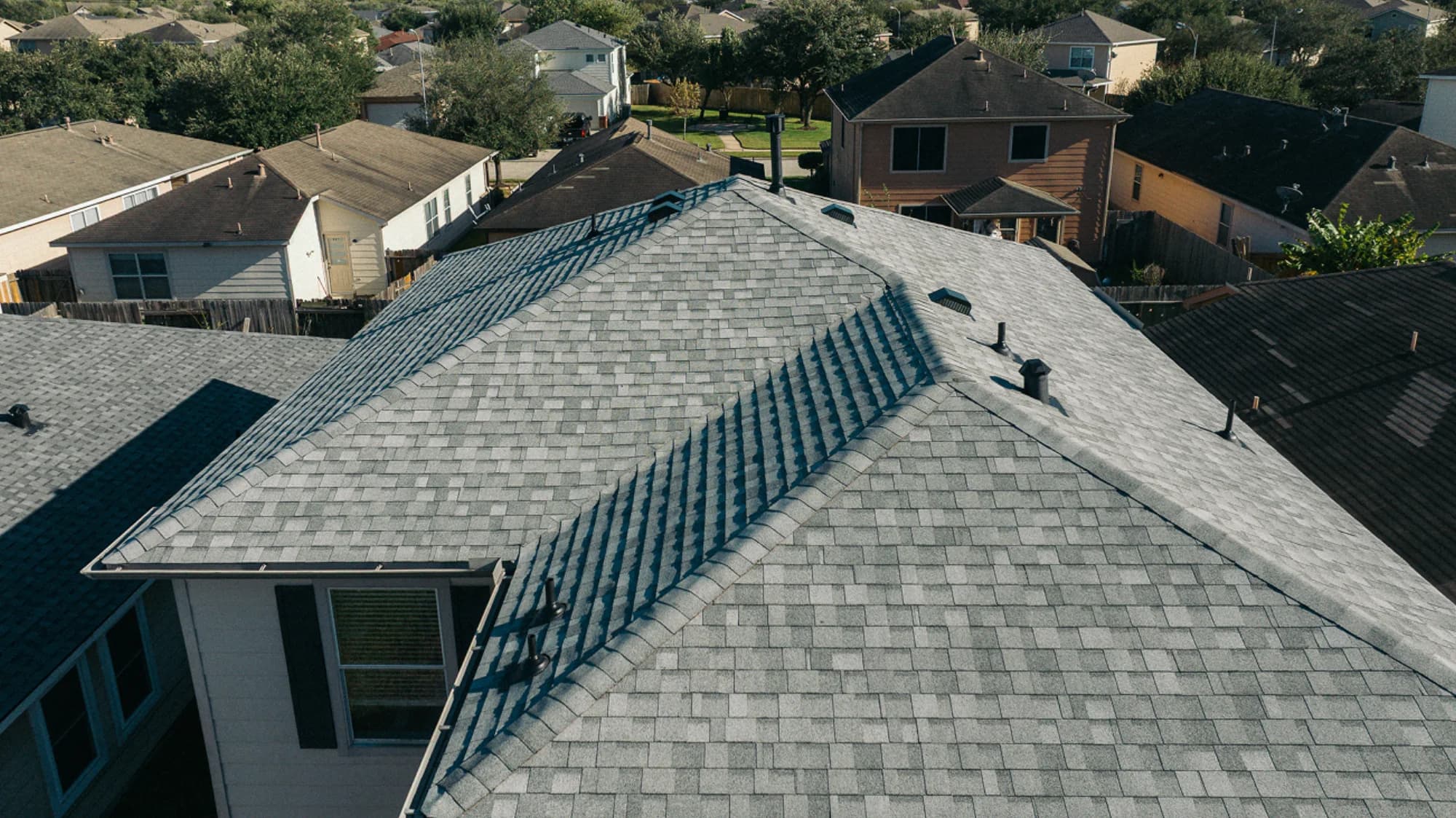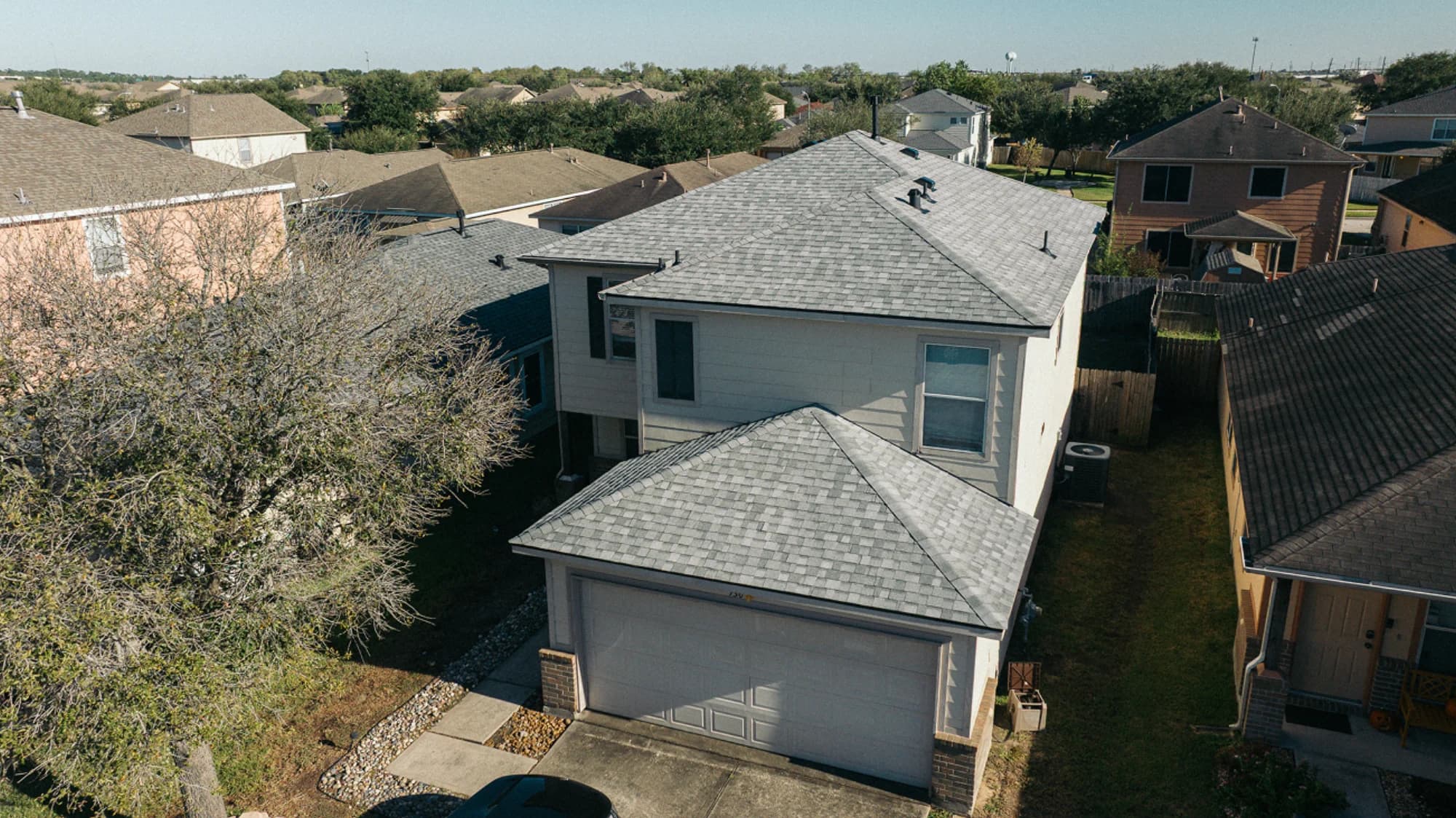
One roof inspection isn’t always enough. After hail or wind, your roof may be inspected twice. A roofer inspects it to document the damage and plan the work. Your insurer’s adjuster inspects it to decide what the policy covers. A good inspection gives you a written record that you can put next to the adjuster’s estimate.
Who inspects your roof after a storm?
The two inspections answer different questions.
A roofer’s inspection looks at the whole roof system: the shingles on each slope, flashing, vents, gutters, and any signs of water getting in. Although it does not decide coverage, it ends in a construction scope and a price.
The adjuster’s inspection is part of the insurance claim. Our guide to who is involved in a roof insurance claim explains that the adjuster evaluates the loss for the insurer, and that the adjuster’s estimate isn’t the final construction plan. For instance, some conditions only show up when the old roofing comes off.
A roofer may be able to attend the adjuster’s inspection, if the insurer permits it, to answer technical questions about the estimate. State rules decide how far a contractor can go in claim discussions, and no roofer should present itself as deciding your coverage. Ask your insurer whether your roofer can be there before you schedule both visits for the same morning.
Should you take a free roof inspection after a storm?
A free inspection sounds great. The catch is the paperwork that sometimes comes with it.
The Texas Department of Insurance (TDI) warns that out-of-town scam artists may be the first to arrive at your door after a disaster, and that scammers will try to get you to sign a contract (opens in a new tab) by calling it an estimate or a release just to go on your roof. TDI also warns against a contract that ties the price to whatever your insurance pays, which could let the contractor collect your entire insurance payment. It says the contract should list the materials the contractor will use. The Federal Trade Commission says to walk away if a contractor wants cash up front, and that a contractor who will not give you copies of their license, insurance, or a written contract is a red flag (opens in a new tab).
TDI covers related warnings in this short video. Some of its points, such as the rule on out-of-town contractors asking for payment before work starts, are Texas law, so check your own state’s rules.
Whether an inspection is free or paid, ask these questions before anyone goes up:
- Is there a charge, and what will I receive? Ask for the photos and a written summary, not only a verbal opinion.
- Can I see your license and proof of insurance? The FTC suggests confirming a contractor’s license with your state or county.
- Will I be asked to sign anything today? Nothing you sign for an inspection should commit you to the work or to your insurance money.
- Will you meet my adjuster? Ask whether the roofer can attend, if your insurer allows it.
If you are not filing a claim, an inspection is still useful. TDI suggests hiring a roof inspector every few years (opens in a new tab) to find problems early.
What should a storm damage roof inspection document?
Any storm inspection should leave a record someone else can check. Remi’s 72-hour plan after hail describes what that record should cover:
- Each relevant slope, with storm conditions separated from age or maintenance issues.
- The parts around the shingles: flashing, vents, skylights, and gutters.
- Visible decking concerns.
- For a home with solar, panel access, mounting locations, and visible conditions around roof penetrations.
Ask for dated photos tied to each finding. A photo labeled “north slope, near the ridge” is more useful to an adjuster than a folder of unlabeled close-ups. Our guide to what hail damage looks like on a roof shows what hail marks on shingles look like.
What does a Remi inspection include?
When Remi inspects a roof for a claim, Remi’s certified team documents the damage with photos and measurements. If your claim is with a carrier that works with Remi, the inspection follows that carrier’s requirements for photos, documentation, and submission. Remi writes the estimate from the inspection, and your insurer decides coverage.
Remi can assist you on your claim: we review the scope your carrier sends and note any discrepancies. The roof itself is installed by licensed, insured partner crews working to Remi’s work order (see Remi’s page for insurance carriers).
Do not mistake the inspection for a quote. Remi’s standard quote comes from aerial measurements, without an in-person visit, so it prices a new roof; it is not a storm damage inspection. Remi inspects roofs in person only on insurance claims.
What happens after the inspection?
Put the roofer’s written scope next to the adjuster’s estimate and look for differences. Are there missing slopes, flashing, vents, or decking? TDI suggests getting at least three bids, and notes that your adjuster can give you an idea of what the repair should cost.
If the two documents disagree, ask the insurer how it wants additional photos or estimates submitted. To see what comes next, from the coverage decision to the final payment, read How Long Does an Insurance Roof Replacement Take?
Frequently asked questions
Not necessarily. Notify your insurer promptly when you suspect damage, since your policy sets the notice rules. A roofer’s inspection helps you understand what you are reporting and gives you a scope to compare with the adjuster’s.
Yes. A routine inspection looks for wear and maintenance problems. A storm inspection tries to tie damage to a specific event and separate it from age; this is the question your adjuster has to answer.
No. Stay on the ground and ask for photos instead. Wet or damaged shingles are a fall risk.
Your next step
Write down the storm date and photograph what you can see from the ground. Then request a roof quote. Tell Remi a storm is involved, and ask what an inspection includes for your address before you schedule the adjuster.
Sources
- 01How to avoid contracting scams (opens in a new tab), Texas Department of Insurance. Accessed 2026-10-15.
- 02How To Avoid Scams After Weather Emergencies and Natural Disasters (opens in a new tab), Federal Trade Commission. Accessed 2026-10-15.
- 03How to avoid contractor scams after a disaster (opens in a new tab), Texas Department of Insurance. Accessed 2026-10-15.
- 04Insurance and your roof: What to know when buying a policy or filing a claim (opens in a new tab), Texas Department of Insurance. Accessed 2026-10-12.