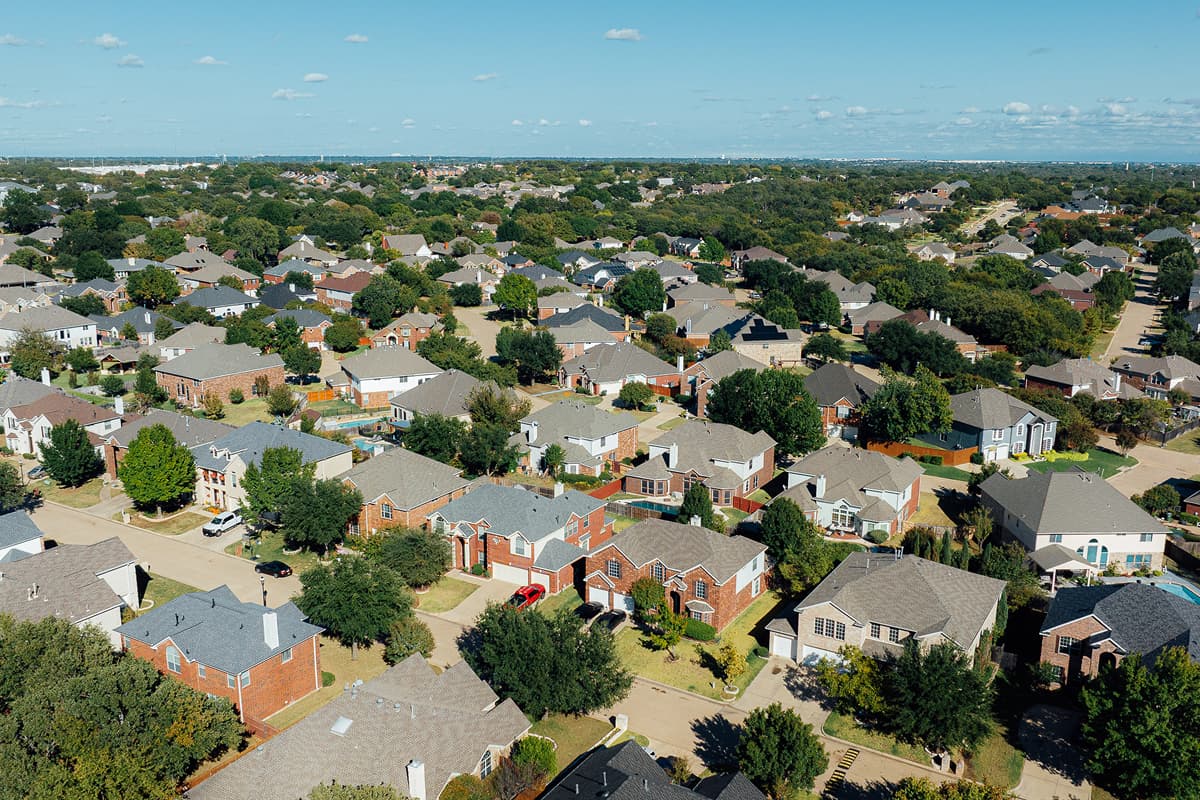
Roofs sit at the center of property claims. The Insurance Information Institute (opens in a new tab) reports that tornadoes, hail, straight-line winds, and severe thunderstorms caused $51 billion in U.S. insured losses in 2025. It estimates that roofs bear 70% to 90% of insured residential catastrophe losses.
How fast those roofs get fixed shapes how policyholders judge their insurer. In J.D. Power’s 2025 property claims study (opens in a new tab), satisfaction averaged 762 on a 1,000-point scale when a claim was completed within 10 days and fell to 595 when repairs took more than 31 days. The 2026 study (opens in a new tab) found that 41% of claimants used a direct repair program, and that repairs on higher-severity claims finished more than two weeks sooner on average for those customers.
A program is only as good as the roofer inside it. Remi is a residential roofing company headquartered in Lehi, Utah. It manages roof replacements for homeowners, works with insurance and solar partners, and owns each roofing project from the first inspection to the certificate of completion.
What does a managed-repair program ask of a roofer?
J.D. Power describes a direct repair program as one through which the insurance company connects homeowners with a contractor from its approved network. Carriers also call these managed-repair programs or preferred contractor networks. The names differ, but the roofer’s job is the same: take an assigned or referred claim, build a scope the carrier can approve, and deliver a finished roof that satisfies the policyholder.
How a policyholder reaches the roofer depends on the state and the policy. Louisiana’s Revised Statutes 22:1892 (opens in a new tab) bar an insurer from requiring a particular preferred vendor or recommended contractor when paying a residential property claim. California’s Guide for Adjusting Property Claims (opens in a new tab) says an insurer may not recommend a contractor unless the insured has been told in writing about the right to choose a repairer and asks for or agrees to the recommended contractor. Florida’s Homeowner Claims Bill of Rights (opens in a new tab) goes the other direction and tells policyholders to contact their insurer before signing a repair contract to confirm any managed repair policy provisions or optional preferred vendors. Our guide for homeowners on what happens after an insurer recommends a roofer covers the same choice from the policyholder’s side.
Accountability follows the referral. Washington’s insurance commissioner (opens in a new tab) tells homeowners that if they use a contractor the insurance company chooses, the insurer should guarantee that contractor’s work. When a carrier puts its name behind a roofer, the roofer’s workmanship and communication become part of the carrier’s claim experience.
In a Property & Liability Resource Bureau (PLRB) podcast episode, Zelle LLP partner Steven J. Badger, who has mostly represented commercial property insurers, describes growing carrier interest in preferred contractor networks and explains why he favors a network endorsement over relying on the policy’s repair option. He also says he supports only programs that work for the insurer, the contractor, and the insured at the same time. His views are his own, and the episode’s scenario is a Texas hail claim.
What do carriers evaluate, and where do Remi’s records answer it?
The table below summarizes the criteria this guide covers. The sections after it explain each one and link to the Remi page where the answer is published. Anything a carrier needs beyond those pages, such as certificates, sample estimates, or cycle-time reports, should be requested in writing during vendor onboarding.
What carriers evaluate in a managed-repair roofing partner
| Question | What to ask any roofing vendor for | What Remi publishes |
|---|---|---|
| Licensing | License numbers for every state and locality in the program | A license directory covering 36 states and local areas; partner roofers must be licensed and insured |
| Insurance | Certificates of general liability and workers’ compensation coverage | Partner roofers must carry $1 million in general liability coverage per occurrence and $2 million in aggregate |
| Cycle time and communication | Time to start, time to complete, and how the policyholder hears about progress | An estimate within 24 hours of an adjuster referral, plus text updates and a project milestone tracker for the policyholder |
| Estimate alignment | Estimates that reconcile to the carrier’s scope and documentation rules | Estimates in Xactimate or Cotality line items on the carrier’s scope and guidelines, following the carrier’s photo and documentation requirements |
| Price stability | How conditions found after tear-off are priced | A published guaranteed price that covers damaged decking, necessary fascia, flashing, and other required repairs, with listed exclusions |
| Quality and warranty | Who inspects the finished roof and who stands behind the workmanship | Completion photos reviewed before the partner crew is paid, a final inspection, and a transferable 5-year workmanship warranty on every roof Remi installs |
| Data security | An independent report on the vendor’s controls | A SOC 2 Type II examination covering Security, Confidentiality, and Availability |
| Roofs with solar | How panels are removed, stored, reinstalled, and warranted | One coordinated roof-and-solar workflow and a 2-year warranty on solar roof penetrations |
Can the roofer prove licensing and insurance in every market?
Licensing rules do not line up across a multistate program. A 2025 Texas House Bill analysis (opens in a new tab) notes that Texas does not require a state-issued license for reroofing contractors. Minnesota’s Department of Labor and Industry (opens in a new tab) requires residential contractors who perform roofing work to be licensed. A vendor list built on one state’s rules will have gaps in the next.
The Federal Trade Commission (opens in a new tab) gives homeowners a simple starting point: consider only contractors who are licensed and insured, confirm the license with the state or county, and ask for proof of insurance. One public benchmark for roofer qualifications is the FORTIFIED Home Roofing Contractor Handbook (opens in a new tab) from the Insurance Institute for Business & Home Safety. It asks a roofing company for a valid state-issued contractor license (or a business license where the state does not license roofers), at least two years in business, verification of $1 million in general liability insurance, proof of workers’ compensation coverage or an exemption, a top-tier manufacturer certification, and at least one certified FORTIFIED Wise Roofing Contractor on staff.
Remi publishes a Contractor License Directory with license numbers for 36 states and local areas. It notes that not all states issue state-level contractor licenses. Under Remi’s partner requirements, partner roofers must be licensed and insured, carry $1 million in general liability coverage per occurrence and $2 million in aggregate, and have an English-speaking foreman on site.
Manufacturer credentials need the same precision. GAF lists Remi as a GAF Certified™ contractor under ID 1158889, and Remi’s Proof and Credentials page links to that listing. GAF’s own tier descriptions (opens in a new tab) separate Certified contractors from Master Elite® contractors, and each tier can offer different enhanced warranties. If a program requires a specific tier, check the listing rather than a general claim of certification.
How fast can the roofer start, and how will the policyholder know?
The 2026 J.D. Power study (opens in a new tab) puts the average repair at 29.6 days and the average wait for final payment at 40.7 days, and it credits direct repair programs with shortening the time to start work. For a roofing vendor, time to start depends on how quickly the scope is approved, permits are pulled, materials arrive, and a crew is scheduled.
For adjuster referrals, Remi’s page for insurance carriers publishes a 24-hour estimate turnaround, measured from Remi receiving the referral and scope of loss to the estimate being ready for review. On claims Remi inspects, the estimate follows the inspection, with timing confirmed for each program during vendor review. After approval, Remi coordinates permits where required and schedules the crew. On its home page, Remi lays out five stages: the quote, confirming the scope of work, permits and scheduling, completing the roof work, and passing the final inspection. Homeowners get text updates and a project milestone tracker along the way.
A homeowner whose insurance company set up the project with Remi described the updates this way:
They were so awesome and kept us updated on pretty much a daily basis.
This describes a single claim. When evaluating any vendor, ask for time-to-start, completion, and communication records across its program projects.
Will the estimate match the carrier’s scope and will the price hold?
Carriers review roof scopes in the estimating systems that their adjusters already use. Verisk (opens in a new tab) pairs Xactimate with XactAnalysis, where users receive assignments, submit estimates, and track status over the network carriers use, and with XactXpert, which runs carrier guidelines as real-time rules inside the estimate. A vendor whose estimates arrive in a different structure creates rework for the desk adjuster.
According to Remi’s page for insurance carriers, Remi writes its estimates in Xactimate or Cotality line items, at Remi pricing, on the carrier’s scope and guidelines, and adjusters can follow each claim in XactAnalysis or Cotality. Remi’s insurance claim FAQ adds that Remi reviews the scope of work the carrier sends and notes any discrepancies. The carrier page also reports Remi’s estimates as 5% below Xactimate pricing, for average savings of over $1,000 per job. That is Remi’s own figure, so a carrier should ask how it is measured and what it would look like on the carrier’s claims.
Price stability after tear-off matters just as much. Under Remi’s guaranteed price, the quoted price covers replacement of damaged or rotted decking, necessary fascia replacement, required flashing replacements, pipe jacks and boots, needed attic vent replacement, additional labor for necessary repairs, and materials price increases. Not every job has a guaranteed price, and the quote says when it does. When it does, the price we quote is the price you pay. A few exclusions apply; see the guaranteed price page. The guarantee governs Remi’s contract with the homeowner. It does not change what the insurer covers or pays.
Who checks the finished roof, and who stands behind it?
In Remi’s partner workflow, we send the partner roofer a detailed work order. The partner schedules with the homeowner, pulls permits, orders materials, and completes the job, then uploads photos for quality review before payment is sent. Remi’s page for insurance carriers adds that Remi inspects the job before the crew leaves the property.
After the job, our warranty page describes a 5-year workmanship warranty on every roof Remi installs, which transfers to new owners if the home is sold, a manufacturer’s limited-lifetime material warranty on the shingles and tiles that we use, and a 2-year warranty on roof penetrations for solar reinstalls. Remi makes the exact warranty language from its standard homeowner contract available to review before work begins.
Some states add a resilience standard to the job. For Alabama, IBHS explains (opens in a new tab) that insurers writing homeowners coverage there must offer a FORTIFIED Roof endorsement. For an added premium, it covers the extra cost of bringing a roof up to the FORTIFIED Roof standard, plus the cost of certification. Under IBHS’s current roofing contractor handbook (opens in a new tab), a roof installed on or after November 1, 2025 qualifies for a FORTIFIED designation only if a certified FORTIFIED Roofing Company installs it. Programs operating in those markets should ask each vendor whether it holds that certification and how it documents the work.
Can the roofer protect policyholder data and stay out of fraud risk?
A managed-repair vendor handles claim numbers, addresses, photos, and payment details. The American Institute of Certified Public Accountants (opens in a new tab) (AICPA) explains that customers and business partners often request a SOC 2 report to understand how a service organization designs and operates its controls. Remi completed a SOC 2 Type II examination covering Security, Confidentiality, and Availability, and qualified customers and partners can request the report. When a project uses PayKeeper, funds sit in escrow and are released as milestones are verified.
Fraud risk is the other reason carriers vet vendors closely. The National Insurance Crime Bureau (opens in a new tab) said reported instances of contractor fraud rose 38% from 2023 to 2025 and named manufactured roof damage among the most common schemes. State rules also limit what a roofer may do in a claim. The Texas Department of Insurance (opens in a new tab) explains that Texas does not allow a contractor doing the work to act as a public adjuster and that offering to waive, rebate, or absorb a policyholder’s deductible is illegal in Texas.
Remi stays in the roofing lane. We prepare the construction scope and quote, and we complete the work while the insurer decides coverage and payment. For homeowners, Remi explains those boundaries in guides on who handles what in a roof insurance claim, deductibles and “zero out-of-pocket” offers, and what happens after a denied claim.
What happens when the damaged roof has solar panels?
Solar panels turn a roof claim into a two-trade project. The panels must be removed and stored, the roof replaced, and the system reinstalled and tested. Delays often come from the handoff between the solar crew and the roofing crew and not from the roofing itself.
Remi runs roof work and solar removal and reinstall as one coordinated project at one guaranteed price. Sunrun calls Remi its trusted and preferred roofing partner, as Remi’s Proof and Credentials page shows. We back solar reinstalls with a 2-year warranty on roof penetrations. A homeowner with Sunrun panels keeps the Sunrun equipment and performance warranty when Remi removes the panels for roof work.
In less than four full days they removed solar panels, gave us a new roof, and replaced the panels.
A single homeowner’s project. Solar timelines depend on the system, the solar provider, permits, and weather.
Can the roofer cover the program’s footprint with local crews?
A national program needs consistent standards and crews who know local codes. As our FAQ on what makes Remi different explains, Remi works nationwide, but each roof is installed by licensed and insured local contractors, using the same standards and process across markets. Our licenses page lists where Remi holds contractor licenses, and our service-area pages list the markets we serve, so a program manager can compare them against the program’s territory.
Partner roofers work to a service-level agreement. Each job has dedicated project support, and partners are eligible for payment in 3 days when they complete jobs within that agreement.
The coordination model is not what every policyholder expects at first. Richard R. wrote about his claim:
I was initially skeptical about using an intermediary between the insurance company and roof/gutter installer (and me), but I’m glad I decided to work with Remi.
Individual experiences vary. Ask any vendor how it assigns crews, oversees them on site, and handles escalations.
Questions to ask any roofing vendor
- Which states and localities do your licenses cover, and where can we verify each number?
- Can you provide current certificates of general liability and workers’ compensation coverage for every crew that will work our claims?
- What is your average time from assignment to approved scope, to start, and to completion?
- How will the policyholder receive updates, and who is their single point of contact?
- Can you share a recent estimate next to the carrier’s original scope?
- How do you price conditions found after tear-off, and who approves scope changes?
- Who inspects completed work before the job closes, and what warranty covers the workmanship?
- Which independent report covers your data security controls?
- How do you coordinate solar panel removal and reinstallation?
Put the answers in the vendor agreement. Program terms that were not covered here, such as additional-insured status, indemnification, and service-level penalties, belong in that agreement as well.
How do carriers work with Remi?
Remi is an approved option with select insurance carriers, and we follow each carrier’s requirements for photos, documentation, and inspection submission. Our page for insurance carriers describes two ways to work with Remi: adjuster-led referrals, where the carrier’s adjuster inspects and sends Remi the scope of loss, and inspections on the carrier’s behalf by Remi’s own W-2 inspectors. In both, the carrier decides coverage and the policyholder decides whether to hire Remi.
Carrier teams can reach us at claimsupport@remihq.com. For a first review, the proof and credentials page collects the license directory, security examination, warranty terms, and outside records in one place.
Frequently asked questions
It is an arrangement in which an insurance company connects a policyholder with a contractor from an approved network to repair covered damage. Carriers and researchers also call these direct repair programs or preferred contractor networks. Some programs are optional referrals; others are written into the policy.
It depends on the state and the policy. Louisiana bars insurers from requiring a particular preferred vendor when paying a residential property claim. California lets an insurer recommend a contractor only after written notice of the right to choose and the policyholder’s request or agreement. Florida’s Homeowner Claims Bill of Rights tells policyholders to check for managed repair provisions. Confirm the rules in each state a program covers.
No. Remi prepares the construction scope and quote, follows the carrier’s documentation requirements, and completes the roof work. The insurer decides coverage and payment, and Remi does not negotiate the claim or interpret the policy for the homeowner.
Remi completed a SOC 2 Type II examination covering Security, Confidentiality, and Availability. Its proof page says qualified customers and partners can request the report through Remi’s Trust Center.
The license directory on Remi’s site lists license numbers for 36 states and local areas. Some states, including Texas, do not issue a state license for reroofing contractors, so check the directory and local requirements for each market in a program.
Sources
- 01Severe Convective Storms Generate More Than $50B in Insured Losses for Third Consecutive Year (opens in a new tab), Insurance Information Institute. Accessed 2026-10-12.
- 022025 U.S. Property Claims Satisfaction Study (opens in a new tab), J.D. Power. Accessed 2026-10-12.
- 032026 U.S. Property Claims Satisfaction Study (opens in a new tab), J.D. Power. Accessed 2026-10-12.
- 04Louisiana Revised Statutes 22:1892 (opens in a new tab), Louisiana State Legislature. Accessed 2026-10-12.
- 05Guide for Adjusting Property Claims in California After a Major Disaster (opens in a new tab), California Department of Insurance. Accessed 2026-10-12.
- 06Filing a homeowner insurance claim (opens in a new tab), Washington Office of the Insurance Commissioner. Accessed 2026-10-12.
- 07Florida Statutes 627.7142, Homeowner Claims Bill of Rights (opens in a new tab), Florida Senate. Accessed 2026-10-12.
- 08Invoking “Our Option”: Increased Use of Preferred Contractor Networks (video) (opens in a new tab), Property & Liability Resource Bureau (PLRB). Accessed 2026-10-12.
- 09Bill Analysis, H.B. 3344, 89th Legislature (opens in a new tab), Texas Legislature. Accessed 2026-10-12.
- 10Who needs a roofer license? (opens in a new tab), Minnesota Department of Labor and Industry. Accessed 2026-10-12.
- 11How to Avoid a Home Improvement Scam (opens in a new tab), Federal Trade Commission. Accessed 2026-08-30.
- 12FORTIFIED Home Roofing Contractor Handbook (opens in a new tab), Insurance Institute for Business & Home Safety. Accessed 2026-10-12.
- 13Alabama FORTIFIED Roof Endorsement (opens in a new tab), Insurance Institute for Business & Home Safety. Accessed 2026-10-12.
- 14Choose a GAF Certified Roofing Contractor (opens in a new tab), GAF. Accessed 2026-10-12.
- 15Xactimate (opens in a new tab), Verisk (Xactware). Accessed 2026-10-12.
- 16SOC 2: Reporting on an Examination of Controls at a Service Organization (opens in a new tab), AICPA & CIMA. Accessed 2026-10-12.
- 17NICB Warns Americans Contractor Fraud Continues to Rise Nationwide (opens in a new tab), National Insurance Crime Bureau. Accessed 2026-10-12.
- 18Roofing and insurance: Know the law (opens in a new tab), Texas Department of Insurance. Accessed 2026-10-12.